
The “House of Thiasos”, a new amazing discovery in Pompeii
A rare megalography on the mysteries of Dionysus.
Pompeii is an essential and unmissable destination if you visit central Italy. One of the most important examples of how impressive the work of archaeologists can be.
When Vesuvius erupted in 79 A.D., the city of Pompeii was buried beneath ash. The city's residents were caught off guard when the volcano awoke from one of its longest slumbers on August 24 of that year. The old city was completely destroyed by the catastrophic eruption. Vesuvius' lava reached extremely high temperatures and accelerated to 110 kilometers per hour. The population had no way of escaping the catastrophe. Each and every fragment of Pompeii has a backstory. The shaded arcades with their fountains, the buildings with their straightforward yet colorful murals, and the graves along the stone alleys. It is maybe one of the few locations left where one can establish a direct connection with the Roman Empire. For this reason, Pompeii leaves its visitors with a lasting and indelible mark.
Highlights: the House of the Vettii, the Villa of the Mysteries, Apollo’s Temple, the House of the Tragic Poet, the Lupanar, the House of the Faun, and Pompeii’s Forum.
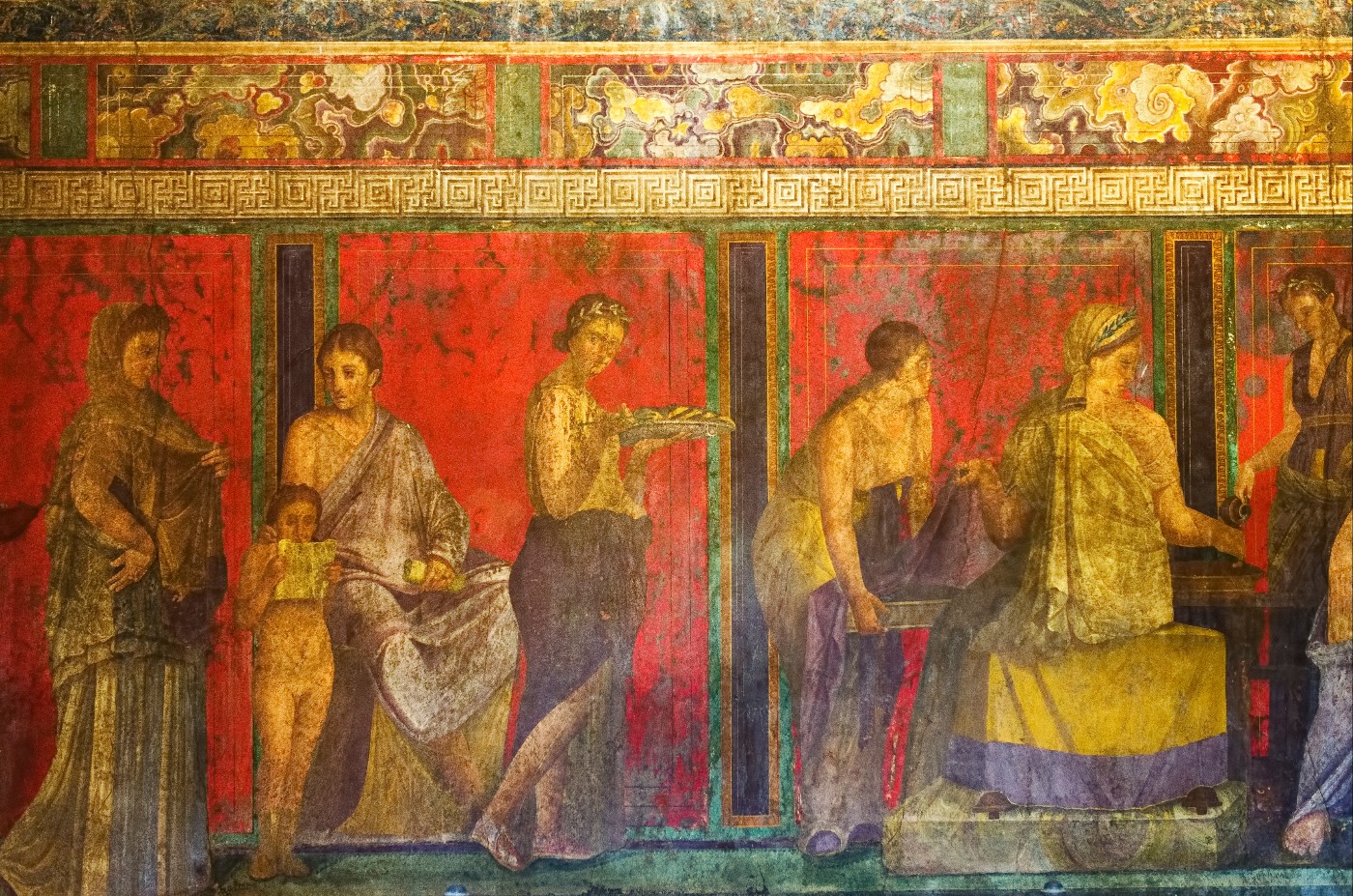
Situated a few hundred meters outside the northern walls of the old city of Pompeii, the Villa of the Mysteries (Italian: Villa dei Misteri) is a Roman suburban villa. A rustic-residential building buried by Vesuvius' eruption in 79 A.D. that only came to light in 1909. It is one of the most visited buildings in Pompeii’s archaeological site and excavations, notably because of the well-preserved frescoes of the triclinium, which depict enigmatic rituals and give the building its name.
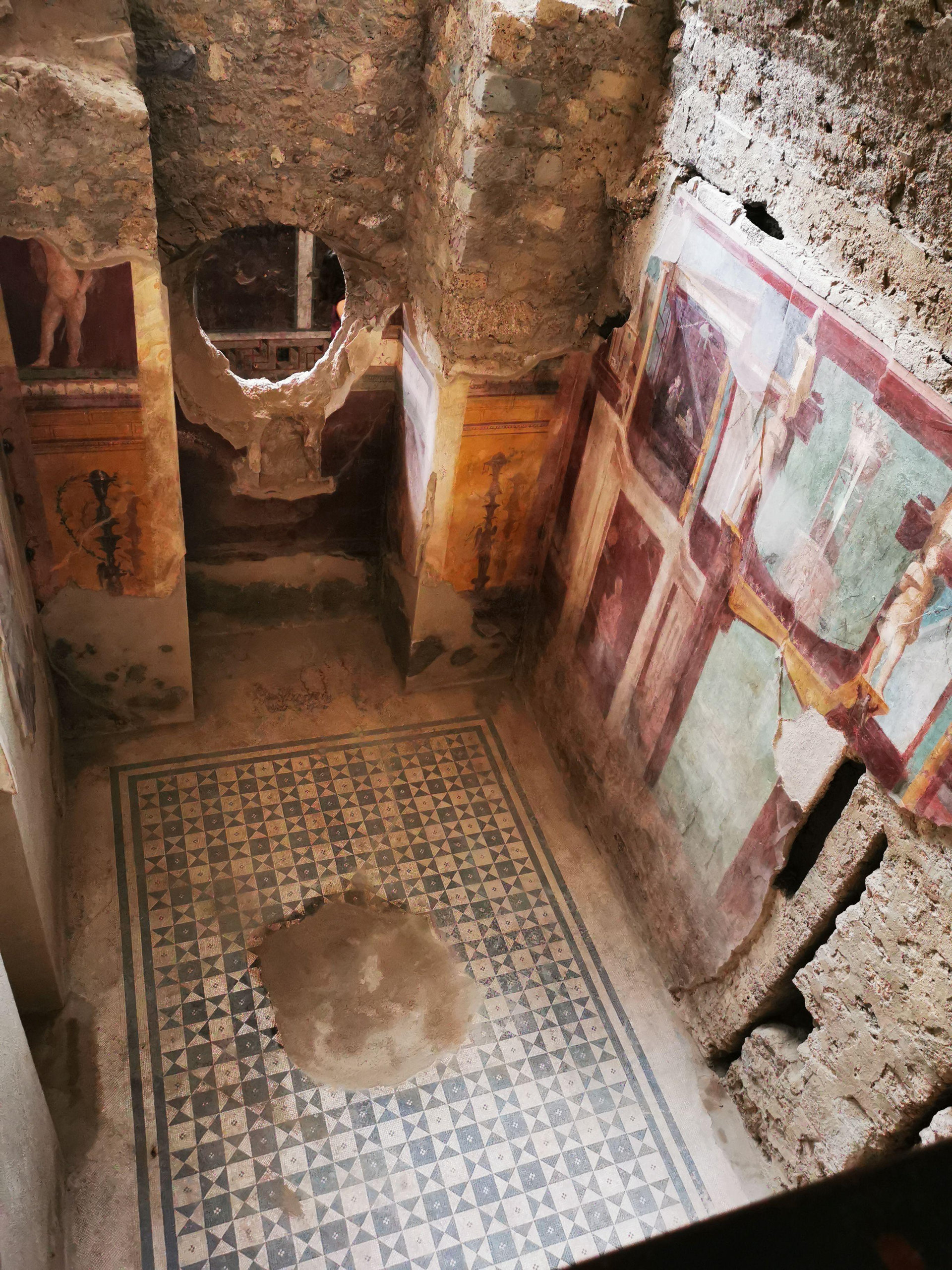
More than 100 years after the Villa of the Mysteries discovery, a new big painting illuminates Dionysus' mysteries in the classic world. A remarkable megalography arose in insula 10 of Pompeii's Regio IX, which was discovered in a large banquet hall in the center area of Pompeii last February . A cycle of paintings with large figures, revolving around three sides of the room; the fourth open to the garden. The painting is not only a religious artifact, but also a stunning example of Roman artistic style. The figures are painted with great chromatic vibrancy, employing trompe-l'oeil to create the illusion of three-dimensional relief. The frieze depicts the procession of Dionysus, god of wine: bacchanals shown as dancers, but also as fierce hunters, with a kid chopped off on his shoulders or with a sword and the entrails of an animal in their hands. As implied by the Pompeii frieze, there were a number of cults in antiquity, notably the one of Dionysus, that were only open to individuals who underwent an initiation ceremony. These cults were referred to as "mysterious" since their mysteries were only known by initiates. Both this world and the underworld's promise of a new, glorious life were frequently associated with them. The central theme of the fresco is thiasos, the sacred procession that precedes Dionysus' initiation into his mysteries. In the center of the scene is a young woman, most likely a neophyte going to be introduced to the cult's mysteries. According to academics, these rituals served a liberating goal, allowing participants to experience ecstasy while overcoming the restrictions set by Roman society.
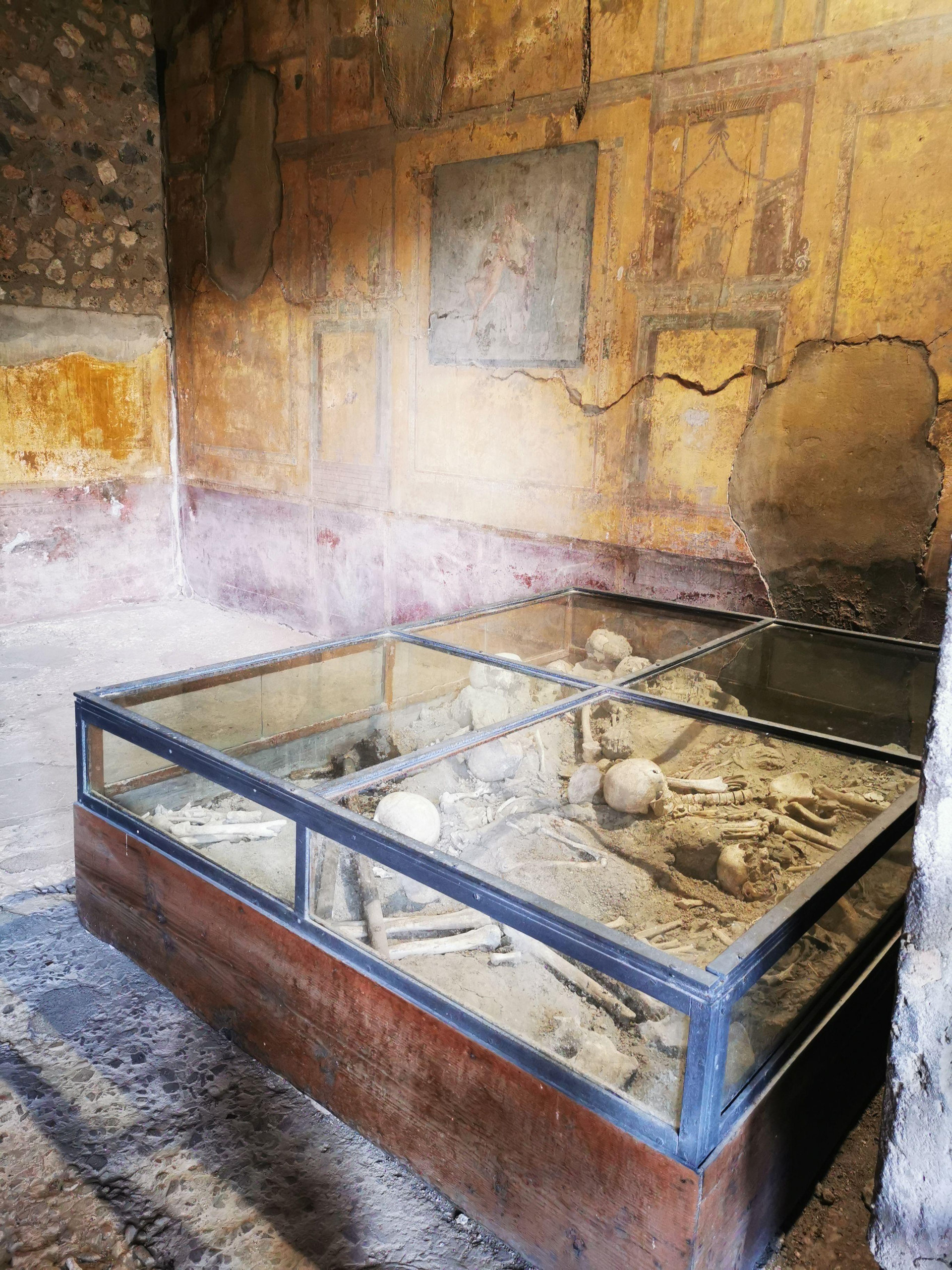
The frieze known as "of mysteries " in the Pompeian-style mansion outside the gates of Pompeii is the only other example of megalography that depicts comparable ceremonies. As opposed to the Villa of the Mysteries, the new discovered frieze adds “hunting” as a topic to Dionysus's fictitious initiatory rites.
A smaller frieze in the upper half of the cycle collects pictures of living and dead animals, fish, molluscs, roosters, birds, a freshly disemboweled wild boar, and figures used to conjure up the hunting motif of the Bacchae, a missing motif in the Mistery's mansion.
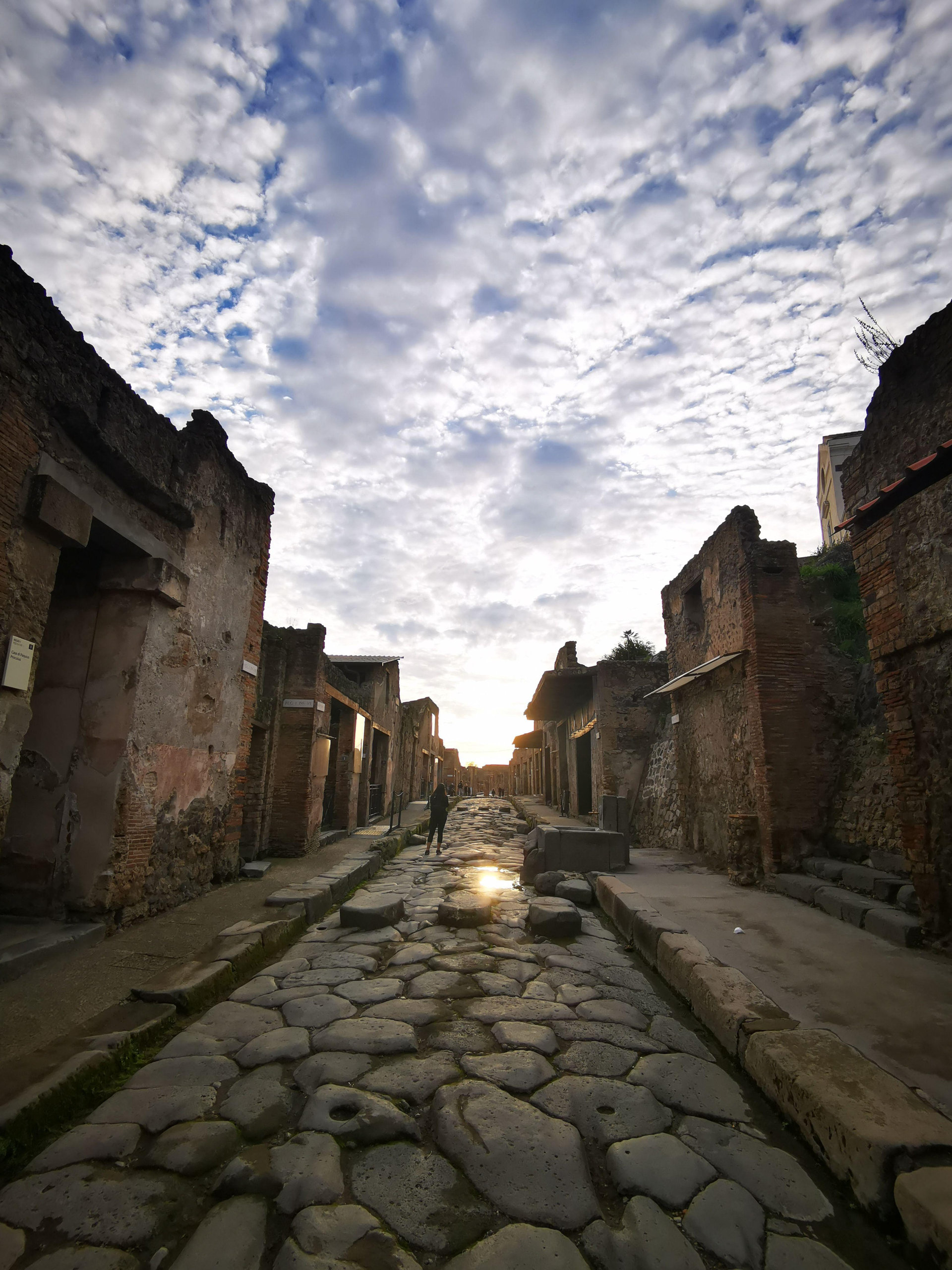
The excavation, which yielded more than fifty new rooms spread across more than 1500 square meters, has brought back two houses with atriums. These houses were constructed during the time of Samnites and converted into production workshops in the first century A.D., including a bakery with an oven and a fullonica (laundry), along with areas for mills and settings for processing food items that would be distributed throughout the city.
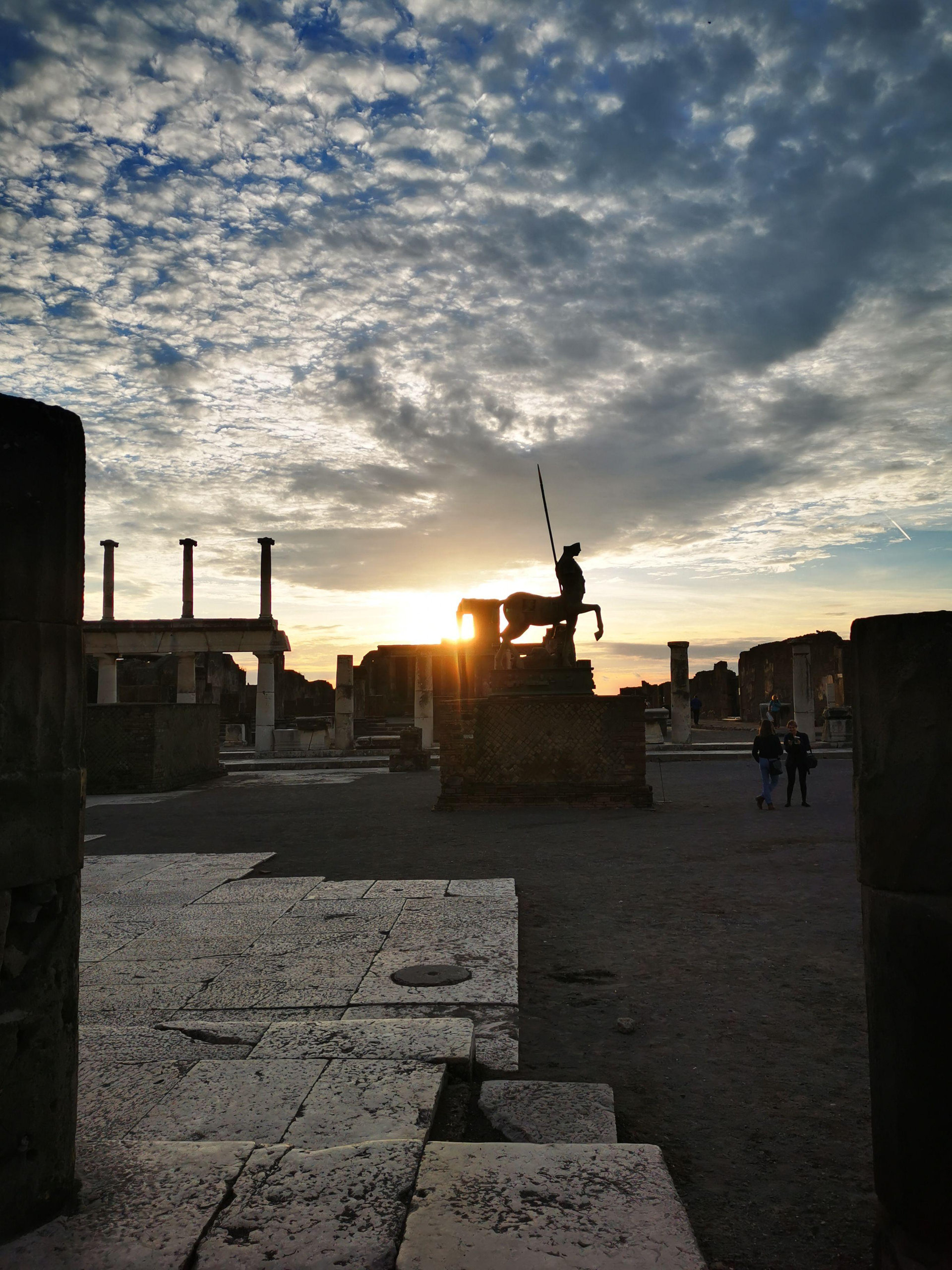
The director of the Archaeological Park of Pompeii pointed out that this iconography directly recalls the Greek tragedy, in particular Euripides’ Bacchae, where the Dionysian frenzy is seen as a means to reach a higher reality.
Ancient Pompeii, with its ruins full of history, returns once again to reveal treasures hidden under the ashes of Vesuvius. An unending treasure trove of archeological finds and antiques from a city that was devastated but that still is remarkably alive. A timeless artistic and cultural heritage.
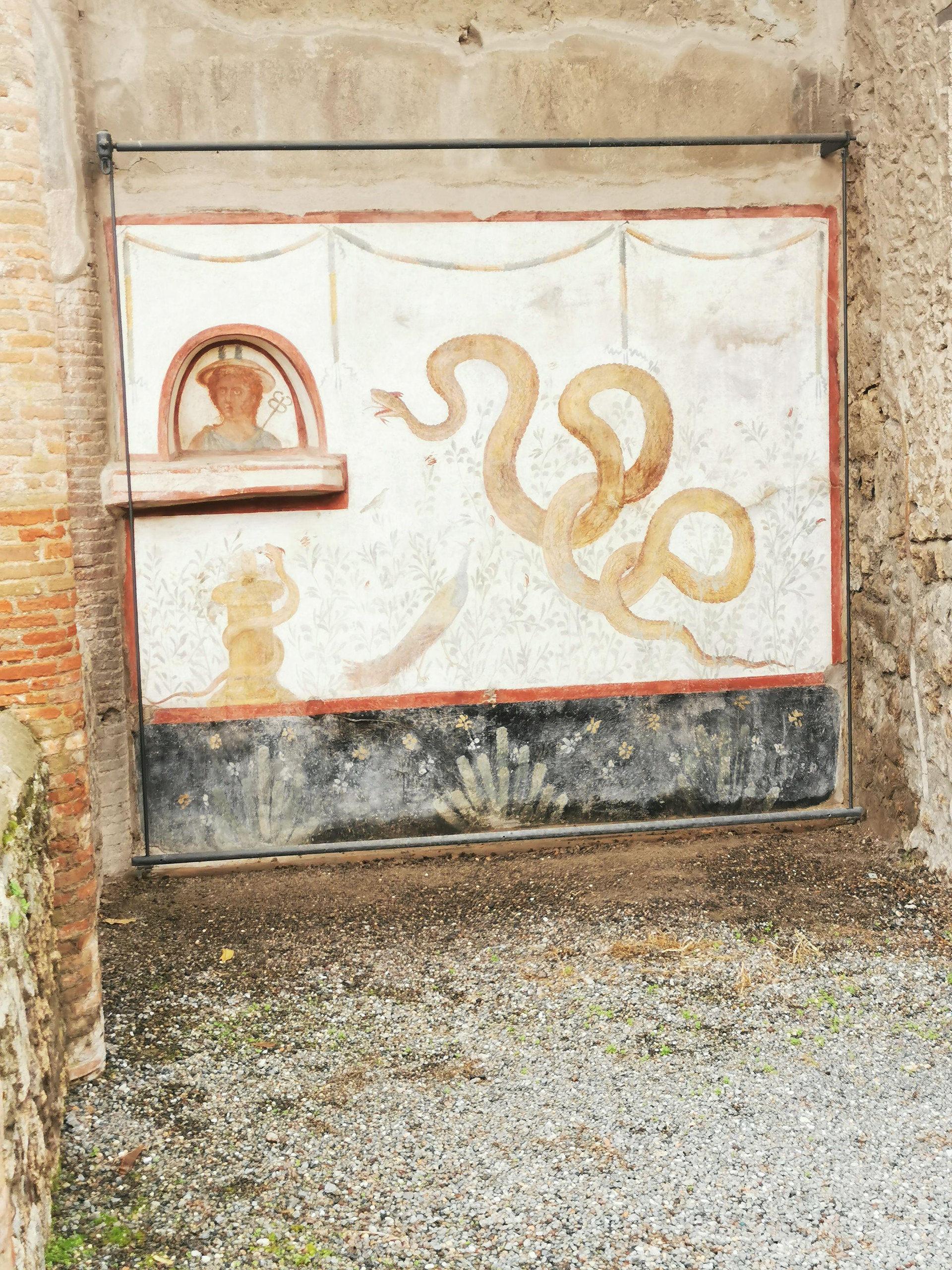
To learn more about this tour, email us at info@zestitalytours.com