
In the Footsteps of Saint Paul
The must-visit places of worship where Saint Paul was beheaded and buried in Rome.
Have you already planned your vacation in Rome during Jubilee Year?
It is crucial to effectively plan your personal time at your own pace in Rome during this significant Jubilee year. This itinerary will enable you to visit places of worship, including lesser-known ones, following in Saint Paul's footsteps between history, religion, and culture.
The Papal Basilica of San Paolo fuori le mura (St Paul outside the Walls) is one of Rome's four Holy Gates and Papal Basilicas, and the largest after Saint Peter's in the Vatican. Also one of the Seven Pilgrimage Churches in Rome and a UNESCO World Heritage site.
It is located along the Via Ostiense, in the homonymous neighborhood, near the left bank of the Tiber, about 2 kilometers outside the walls of Aurelio (thus its name), exiting from Porta San Paolo. It stands on the spot where tradition indicates the burial of the apostle Paul; the saint’s tomb lies under the papal altar. A sacred structure was created to house the bones of the apostle and martyr Saint Paul, to commemorate his life and work, and to welcome pilgrims coming to pay their respects. The ancient basilica was built in the fourth century on the location of Saint Paul's burial. As a Roman citizen, Saint Paul was spared the slow torture of crucifixion and was instead beheaded for the crime of becoming Christian.
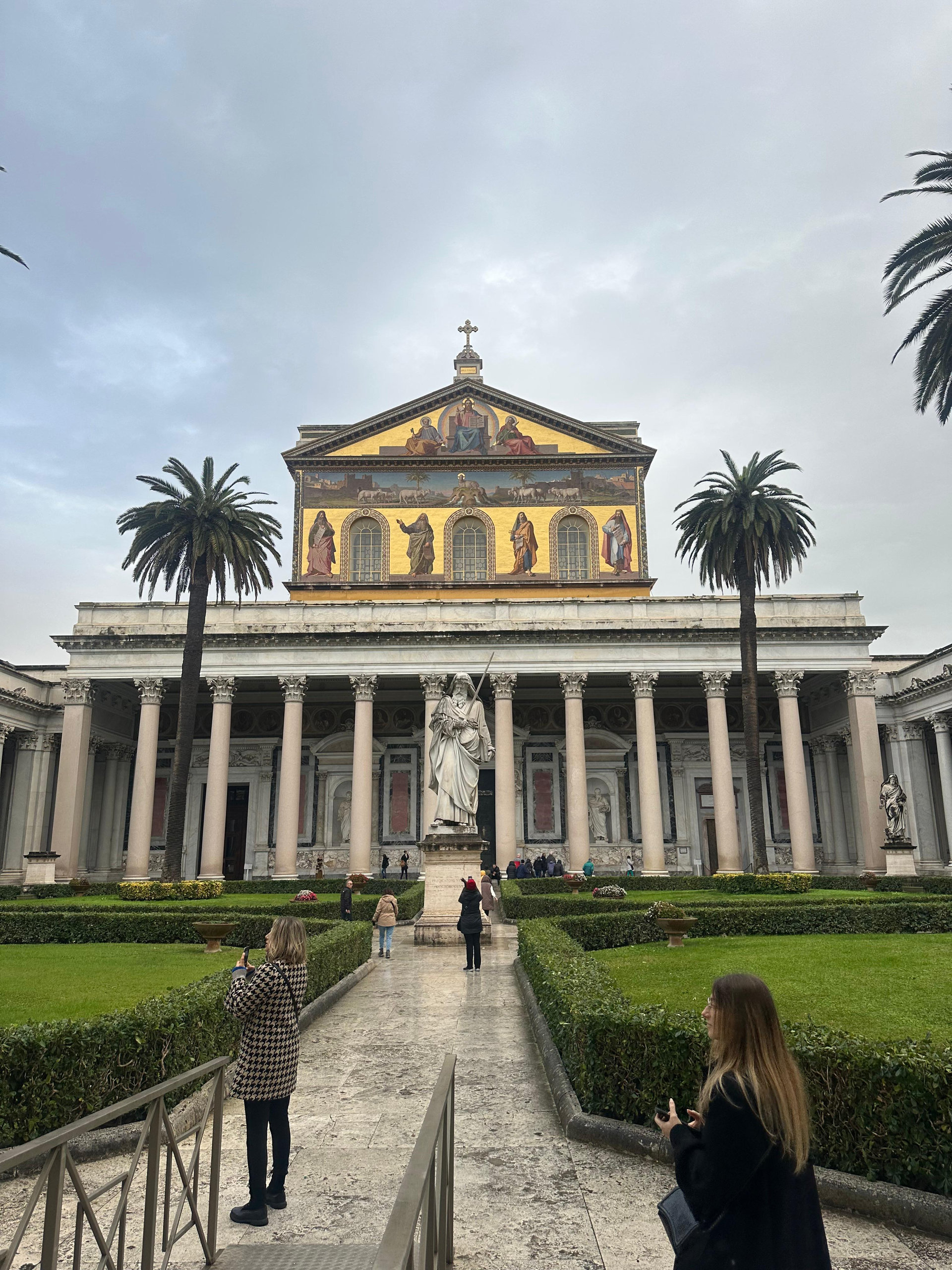
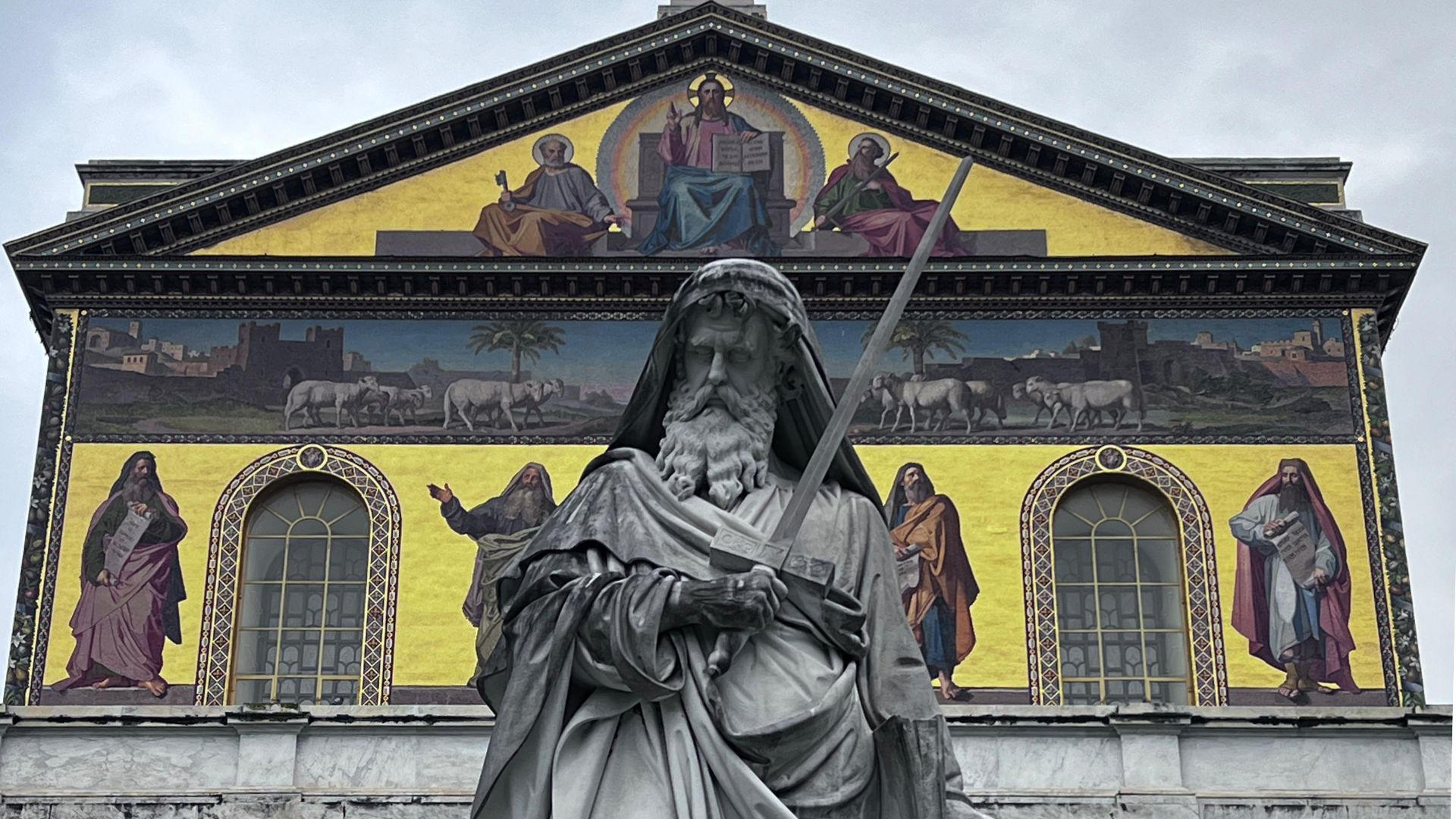
The Basilica's spectacular golden mosaic front is richly symbolic, same as the design of the cloister and, of course, the conclave behind the main altar. The catechesis, which attests to the presence of the Church and the living Word of God as taught by Saint Paul himself, melds in perfectly with every distinctive feature of the basilica.
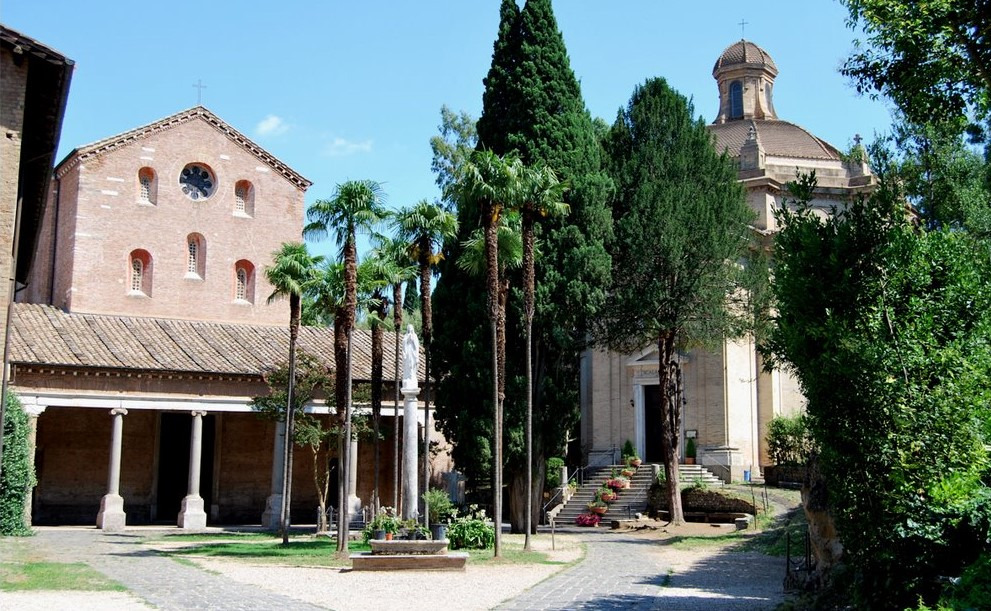
The four-sided porch is a magnificent piece of architecture that pilgrims use now but also in the past, when the Via Tecta connected Porta San Paolo and Ostiense.
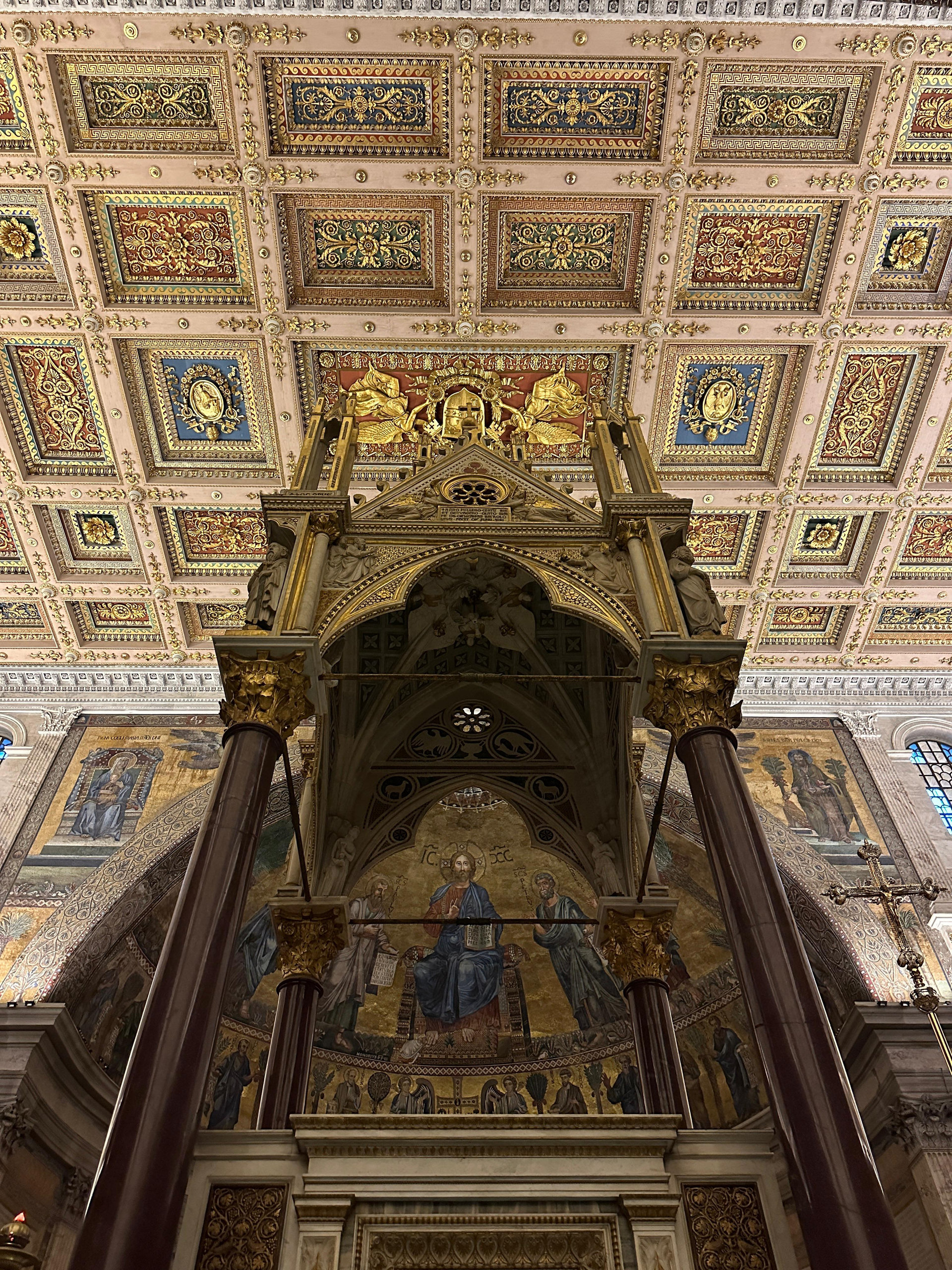
The Basilica of Saint Paul has undergone multiple renovations throughout the centuries, it was restored and even partially rebuilt following a disastrous fire in 1823. It presently stands majestically at over 1700 years old.
Following the traces of Saint Paul, along the Via Laurentina lies the Abbey Complex of the Three Fountains, a place of meditation and reflection that is poorly recognized in comparison to the capital's famed landmarks but has a significant spiritual and historical worth.
Immersed in a verdant and calm environment, the abbey greets visitors in a peaceful atmosphere away from urban commotion, making it suitable for those looking for an unforgettable moment of introspection.
The Church of San Paolo alle Tre Fontane is a Catholic church in Rome's Ardeatino area, part of the Three Fountains Abbey complex. It is the oldest of the three churches constructed within the well-known Roman abbey.
The history of the Popes has been connected to the Abbey of the Three Fountains through a number of historical occurrences. Gregory VII trusted the Cluniacs with the Three Fountains Abbey and its belongings at the end of the eleventh century since they were the most influential monastic order at the time. However, this predominance was short-lived because, in 1140, the monastery was transferred from Innocent II to the Cluniacs and handed to the Cistercians. The construction of the abbey church and the organization of the monastery as we know it now dates back to this period, with a document from 1161 tracing for the first time all three churches that are part of it:
• The Abbey Church of Saints Anastasio and Vincenzo;
• The Church of Santa Maria Scala Coeli;
• The Church of St Paul at the Martyrdom, where Saint Paul was beheaded.
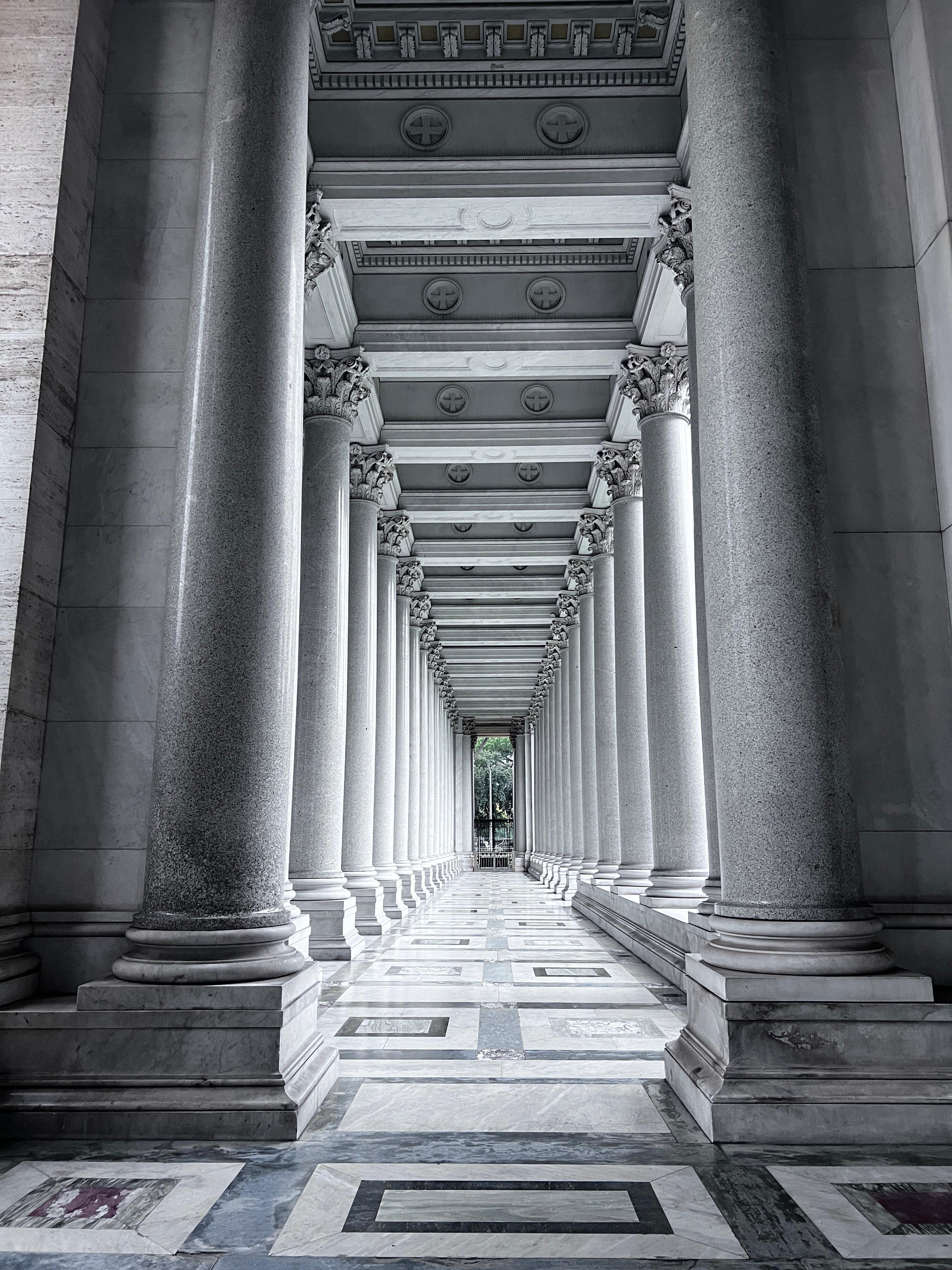
The Abbey Church of Saints Anastasio and Vincenzo has essentially not changed since its 12th-century construction. Everything is constructed in brick, according to Lombard practice, and the church and other conventual structures have a sturdy, austere, and naked style that is indicative of the Cistercian touch.
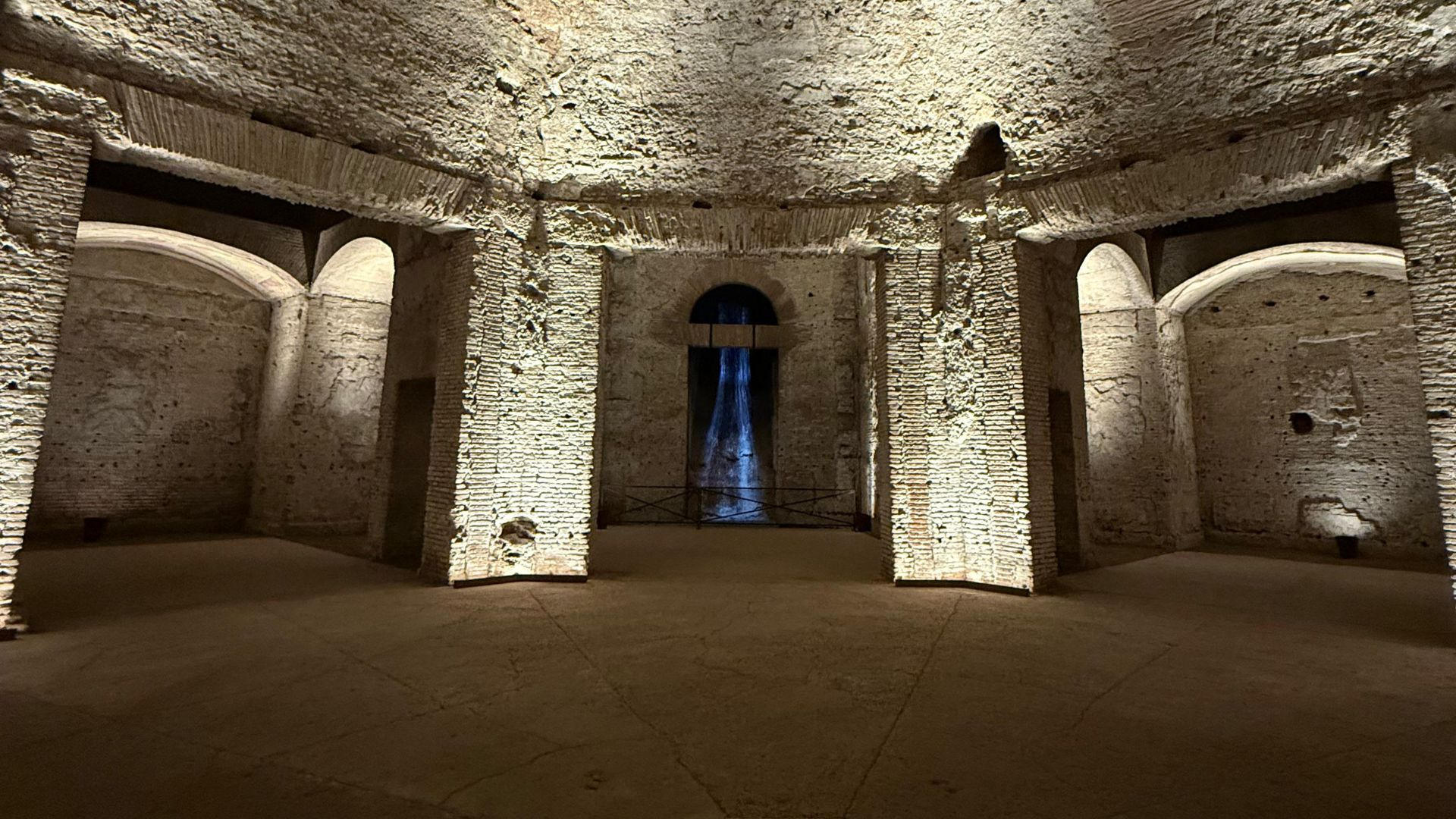
Since ancient times, the Church of Santa Maria Scala Coeli has been an oratory dedicated to the Virgin Mary. It contains the remains of an ancient Christian cemetery and an altar dedicated to the goddess Dia, and it is believed to have been Saint Paul's last prison before his beheading.
The Church of St Paul at the Martyrdom, known also as the Church of St Paul at the Three Fountains, actually stands on the site, formerly known as Aquas Salvias, where Saint Paul was martyred by decapitation: the legend tells that his head, once cut, bounced three times on the ground, each leap resulting in a spring of water, hot, warm, and cold, hence the name of the three fountains.
The interior of the church is simple and solemn, reflecting the complex's overall sense of humility. The minimalist design and plain decorations contribute to the creation of an intimate setting in which the visitor can rest and reflect. The chambers, which have been repaired over the ages, today house a community of Trappist monks who handcraft liqueurs and honey, inviting visitors to enjoy this piece of Rome where history meets faith.
San Paolo district which takes the name from the Basilica is absolutely worth a visit if you wish to immerse yourself in the popular Rome outside of the ordinary tourist spots.
Located in Rome's southern suburbs, bordering the districts of Garbatella, Portuense, Testaccio, Ardeatino, Europa, and San Saba, it spans from the Magliana district to Viale Marconi and it is one of the most dynamic and frequently visited boroughs of Rome. The district is full of small neighborhoods with distinct personalities, in a zone that is suspended between the past and present, between history and modernity. The art nouveau-styled public housing and Schuster Park with the memorial for the fallen of Nassiriya are interesting spots to include in the tour of the area. Visiting San Paolo neighborhood entails experiencing not only the vibrant city life but also a location that has shaped Rome's history and is a mingling ground for religion, art, culture, and history.