
Domus Aurea, Rome — Relive the ancient splendor of Rome by visiting the Palace of Nero
"Well! I can finally start living like a human being!” Nero, entering for the first time in his Domus Aurea
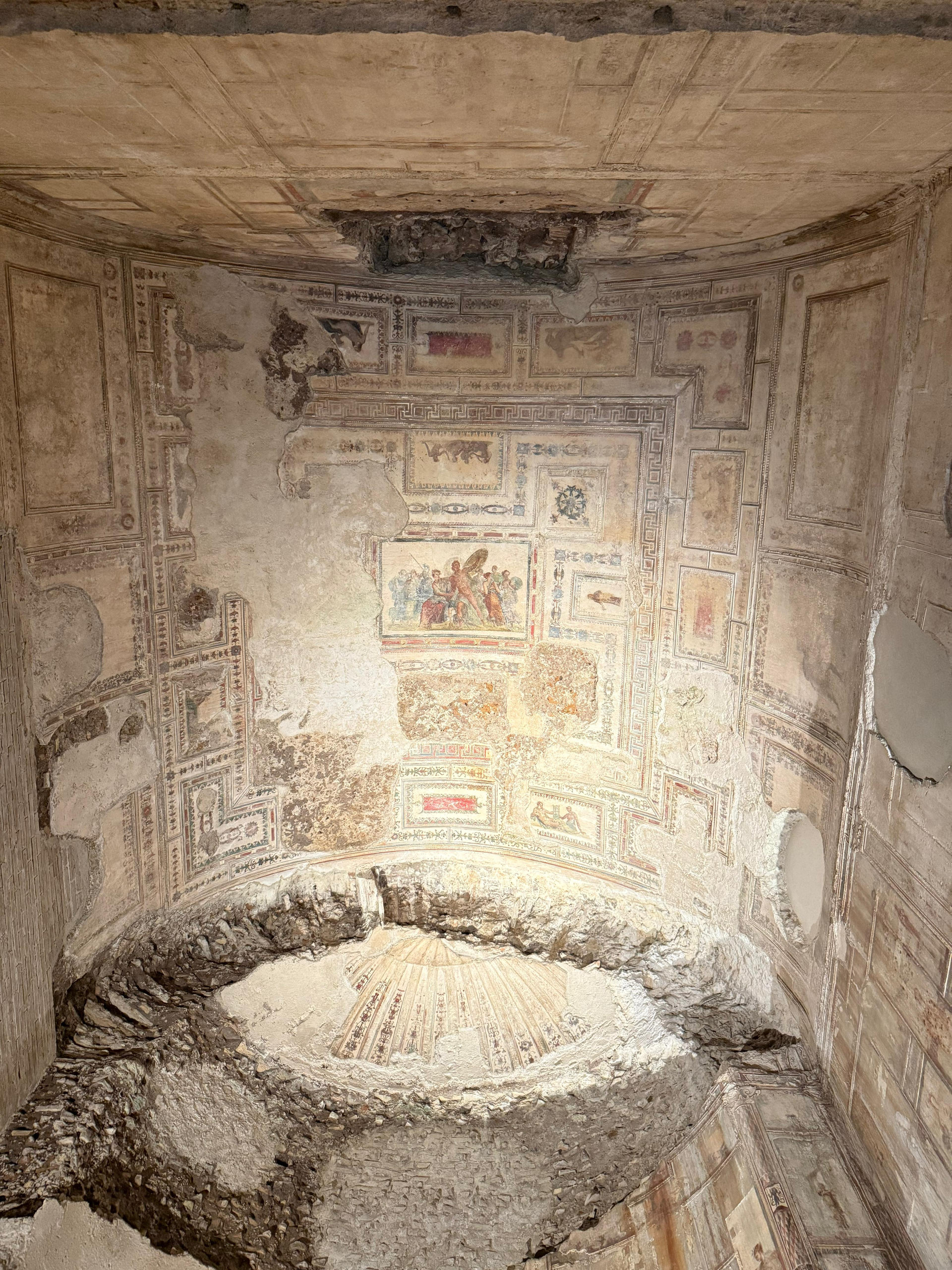
The Domus Aurea, located on Parco del Colle Oppio in Rome, is a wonder in the wonders, a jewel that stretched from the Palatine to the Esquiline Hill. It was so so large that it was called 'rus in urbe', a 'city garden evoking the rural countryside'. It covered the three hills Esquilino, Oppio and Celio. Following the terrible fire of 64 AD, which burned much of Rome's center, Emperor Nero began the construction of a new house, the Domus Aurea, which got its name from its historical grandeur and splendor. The Roman historian Suetonius wrote that the house was so vast that it was surrounded ‘by a porch, and three-stacks of columns, a thousand steps long’, and in whose vestibule was erected a colossal statue of Emperor Nero, ‘one hundred and twenty feet high'. Around the house an artificial lake and the vastness of the countryside with cultivated fields, vineyards, pastures and forests, inhabited by 'all kinds of domestic and wild animals’.
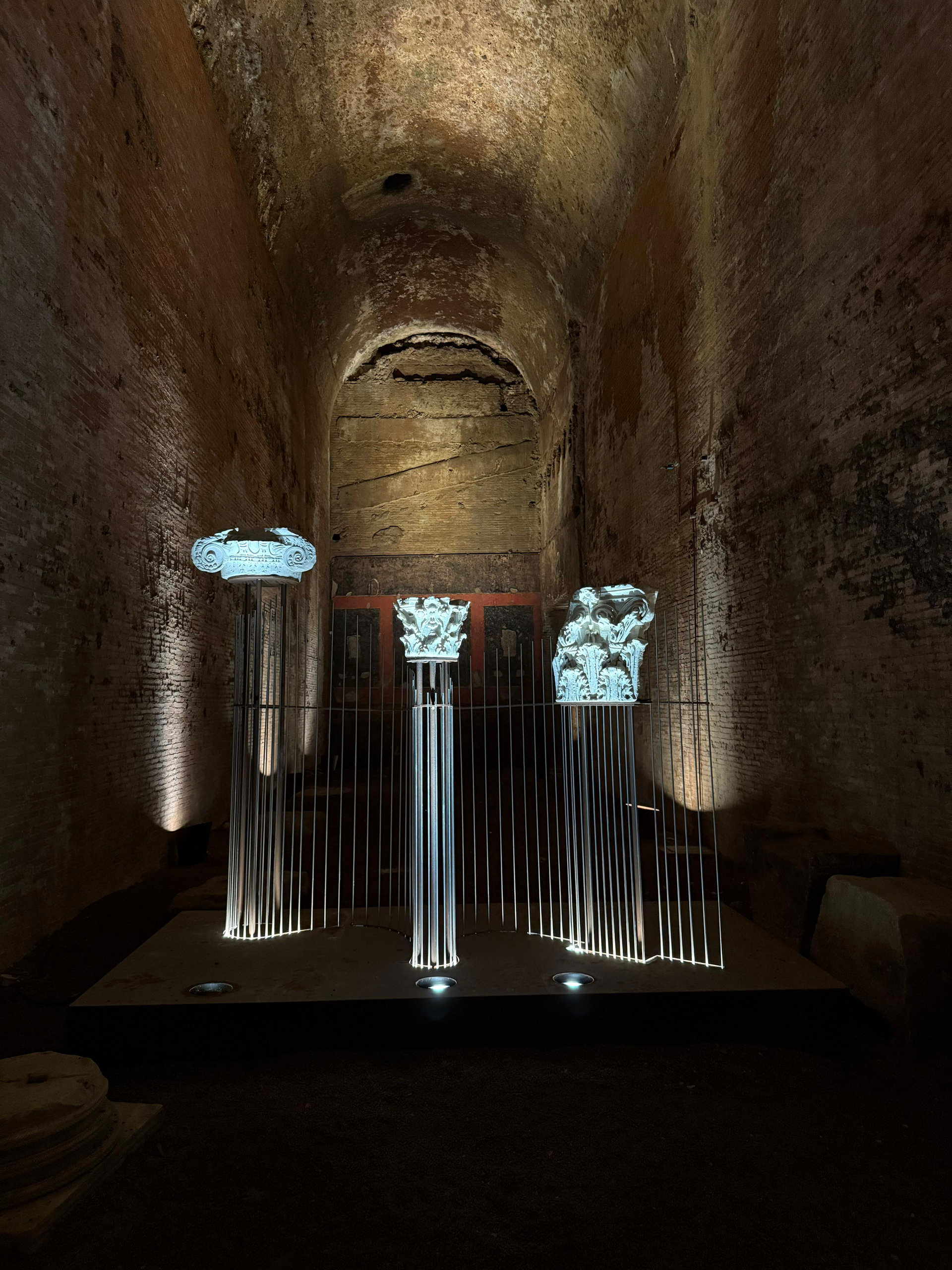
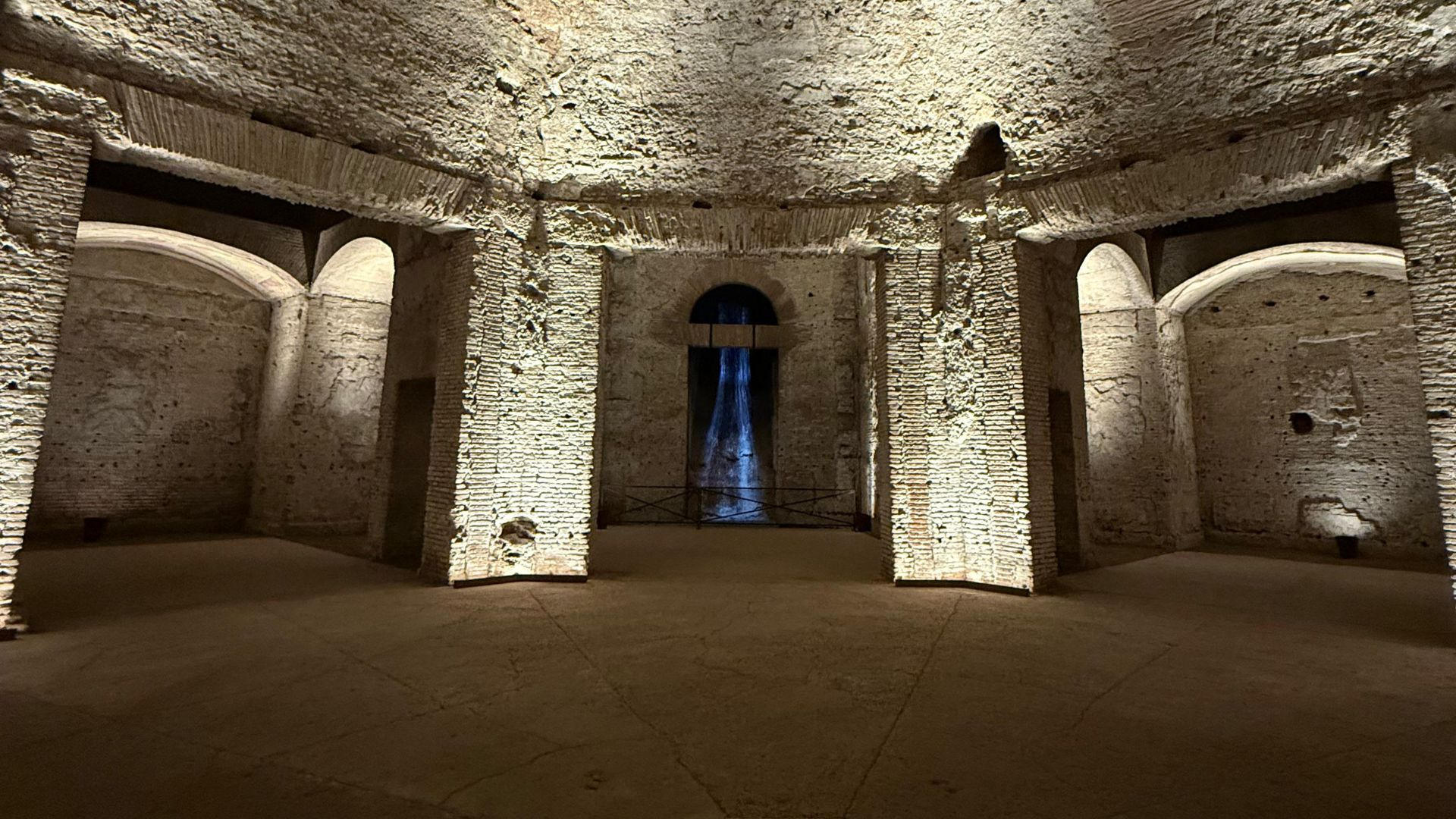
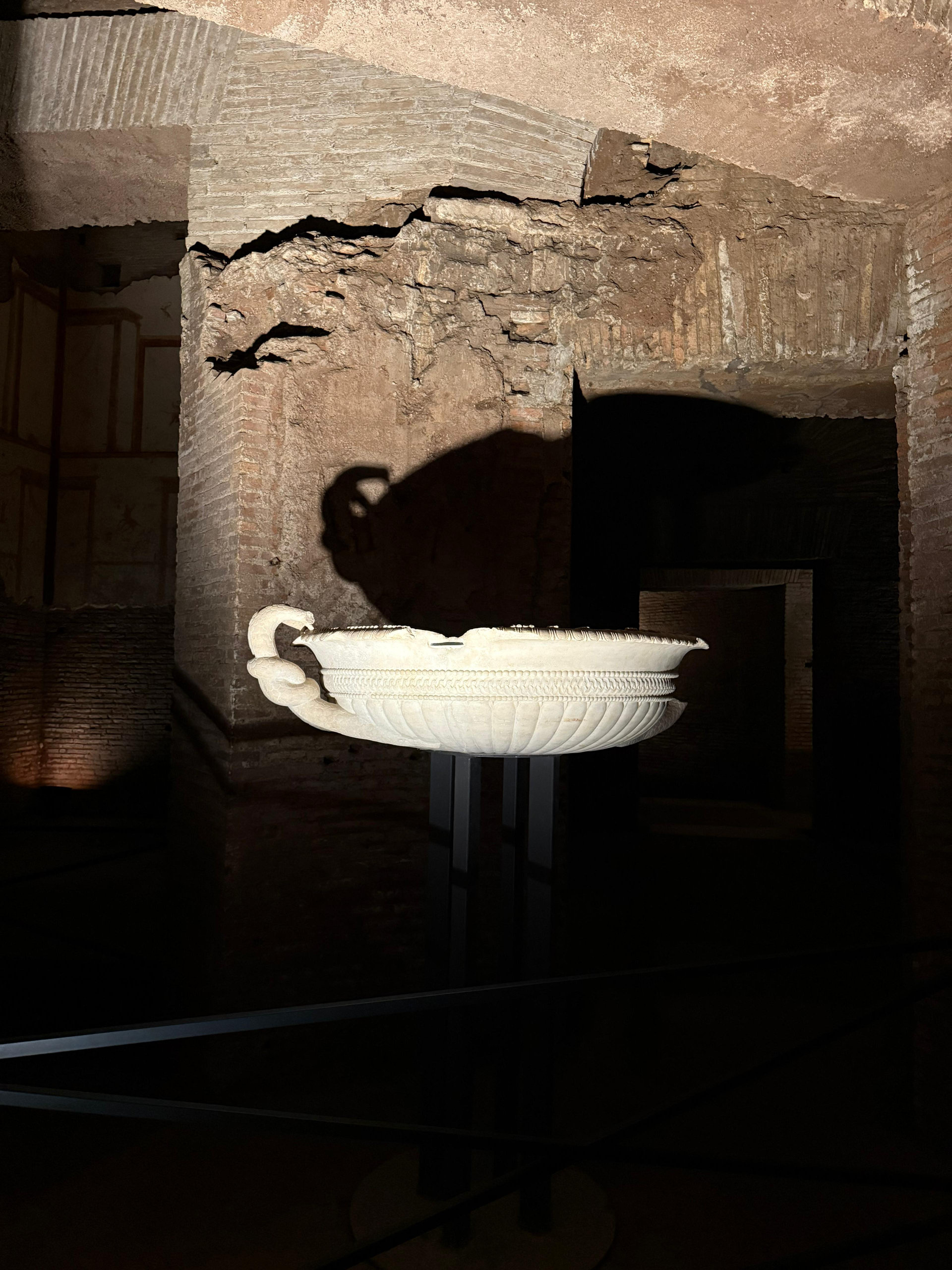
The dining rooms' ceilings were made of moveable ivory tablets and pipes, enabling for the ceremonial flinging of flowers or perfumes at guests; the building was adorned with valuable stones, pearls, shells, and gold. The main room was spherical, and it revolved constantly, day and night, on itself, like the world; in the baths flowed the waters of the sea and those of Aquae Albulae (the so-called white waters, mineral springs situated in the Roman countryside to the west of Tivoli, which have been renowned for their curative powers since ancient times).
Following Nero's death, his successors sought to remove all evidence of the emperor and his residence. The magnificent rooms were stripped of their paneling and sculptures, and filled with earth up to the vaults to serve as substructures for other buildings. centuries.
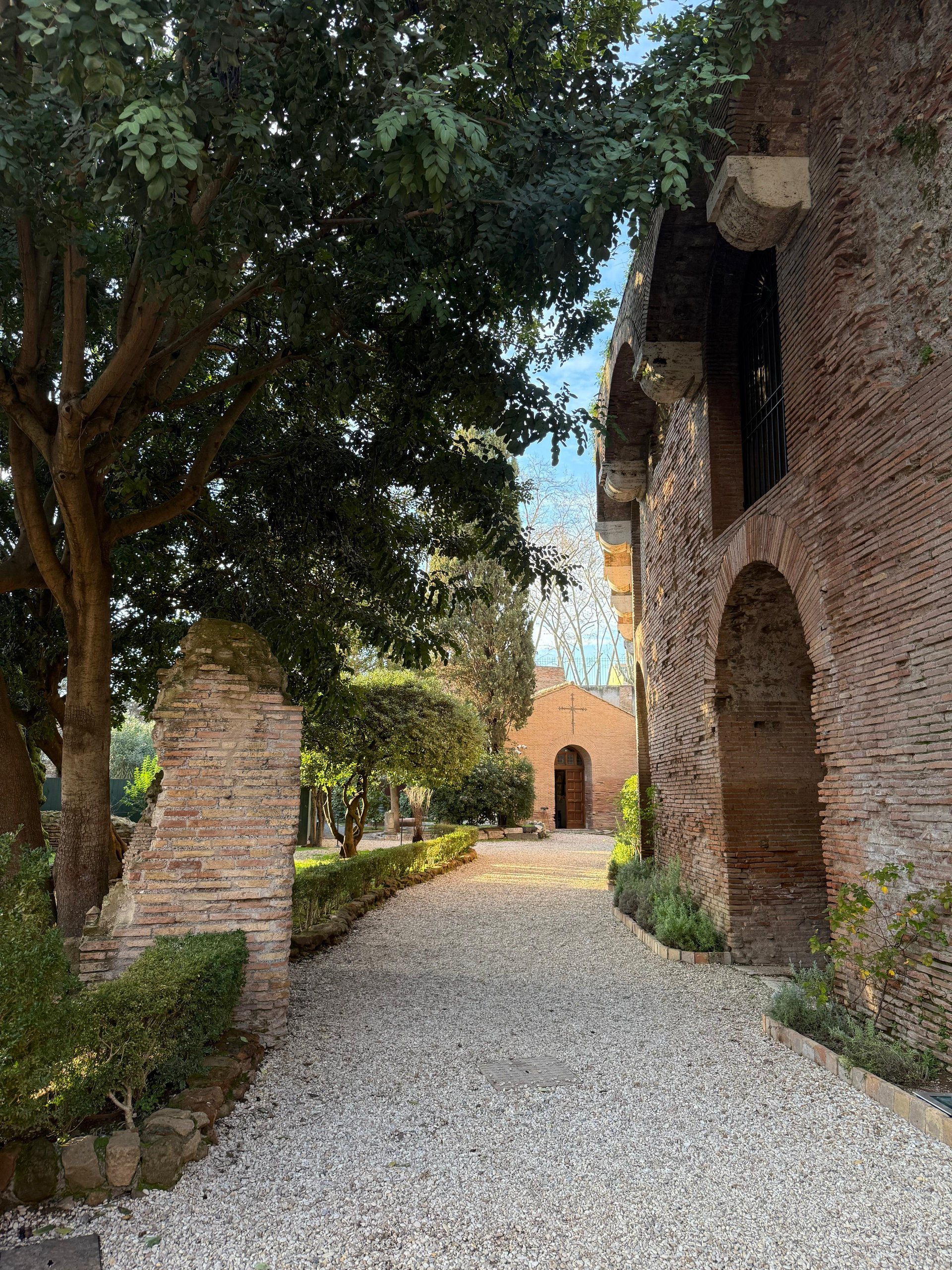
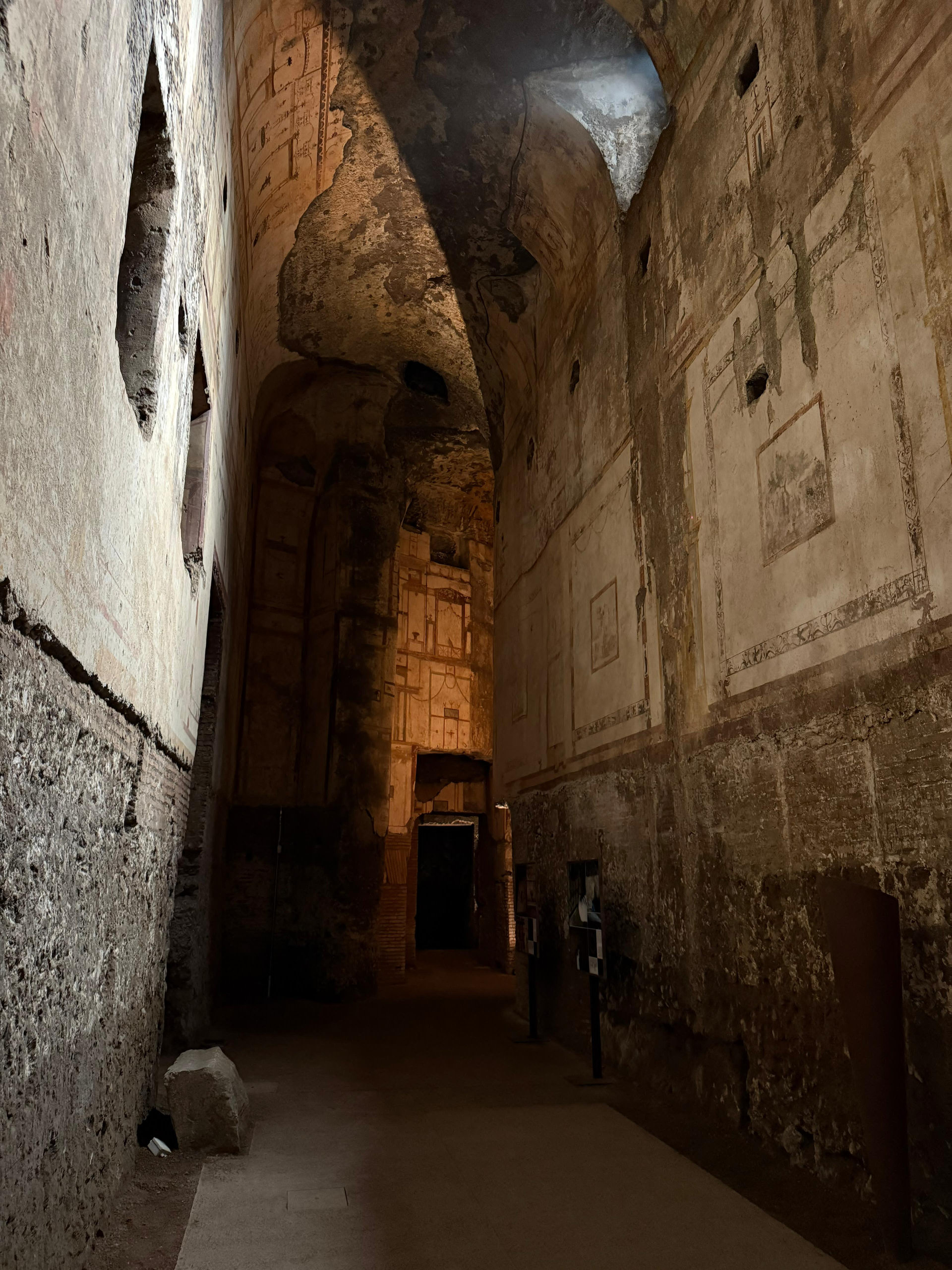
Today the areas that can be visited are those on Oppio hill: habitats that were most likely intended for feasts and banquets but were buried and forgotten until the Renaissance. Only then, after some fortuitous discoveries, artists passionate about antiquities such as Pinturicchio, Ghirlandaio, Raffaello, and Giulio Romano began to descend from above in those "underground caves" to copy the decorative motifs that they preserved and that, precisely because of their location, earned the name "grotesque". Even today, the term "grotesque" is used to denote a genre, most popular in the 16th century, which reworks and reinterprets in a whimsical and innovative way the motifs of the Roman wall decorations.
Recently, the Domus Aurea has returned to astound with a unique discovery. During recent archaeological investigations at the magnificent imperial house, scholars discovered two tanks that were utilized at the time of building to extinguish lime and preserve or process pigments destined for fresco decoration.
The most striking discovery was an Egyptian blue ingot of remarkable dimensions, 15 cm tall and 2.4 kilos heavy. An incredibly unusual find: this precious pigment is typically discovered in the form of powder or small spheres, as proven by Pompeii's finds. Egyptian blue, regarded as one of the oldest and most precious pigments in antiquity, does not occur naturally but is synthesized. Its preparation requires a mixture of silica, limestone, minerals containing copper and sodium carbonate, cooked at high temperatures. Egyptian blue was employed in ancient Rome to create intricate color effects. Used alone or in combination with other pigments to emphasize visual elements such as chiaroscuro in clothing folds, eye shine, and depiction of cooler tones in complexions. It was a symbol of luxury and technical prowess, available solely to affluent customers. This rare and valuable pigment combines past and present, ideally linking the skilled hands of Roman craftsmen with those of Renaissance painters. It is not only an object of study, but also a symbol of artistic and cultural continuity that connects Rome's history to humanity's great masterpieces.