
Two Weeks in Italy from the U.S.: How to Use Your Time Without Rushing
Planning two weeks in Italy from the United States requires more than choosing beautiful destinations. This guide explains how to calculate your real travel time, select the right bases and create a journey that feels complete without trying to see the entire country at once.
Planning a two-week Italy itinerary from the U.S. begins with an uncomfortable calculation: fourteen days on the calendar do not equal fourteen full days of travel. The arrival day is shaped by the overnight flight and jet lag. The departure day is rarely a complete day. Every hotel change also takes time, even when the distance between two destinations looks short on a map. In practice, a two-week journey may offer eleven or twelve genuinely usable days. That is still enough for a rich first experience of Italy, provided the route is selective and the rhythm is realistic. The goal is not to fit as many names as possible into a proposal. It is to choose the right combination of places and give each one enough time to become more than a photograph.
Begin by counting the days that are actually available
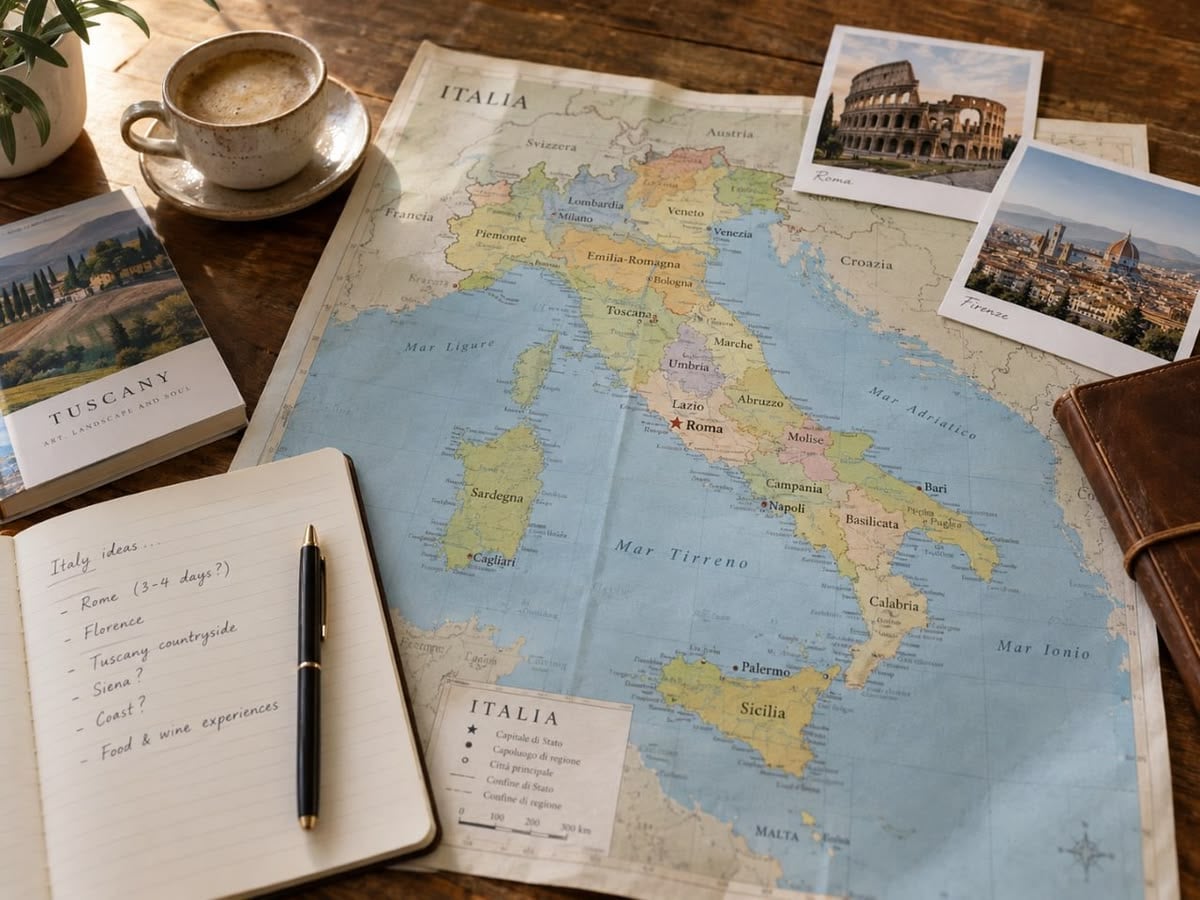
Before choosing regions, look at the complete travel window. When do the travelers land? Will they be ready to explore that afternoon, or will the first day work better as a gentle introduction? What time does the return flight leave? How many hours will be absorbed by transfers, check-ins and packing? These details often determine the itinerary more than the number of days written on the request. It is useful to begin with the wider picture of Italy’s destinations and travel regions, then decide which combination can genuinely work within the time available.
Consider the journey as one direction
An open-jaw flight can sometimes make a two-week trip much more efficient. Arriving in Rome and departing from Venice, for example, may avoid unnecessary backtracking. But this is not an automatic solution. Flight schedules, fares, hotel availability and the order of the destinations all need to support the same structure. The important question is not simply where the journey starts and ends. It is whether the route moves naturally from one chapter of Italy to the next.
Choose three or four meaningful bases
For many travelers, three or four well-chosen bases create a more comfortable rhythm than changing hotels every one or two nights.
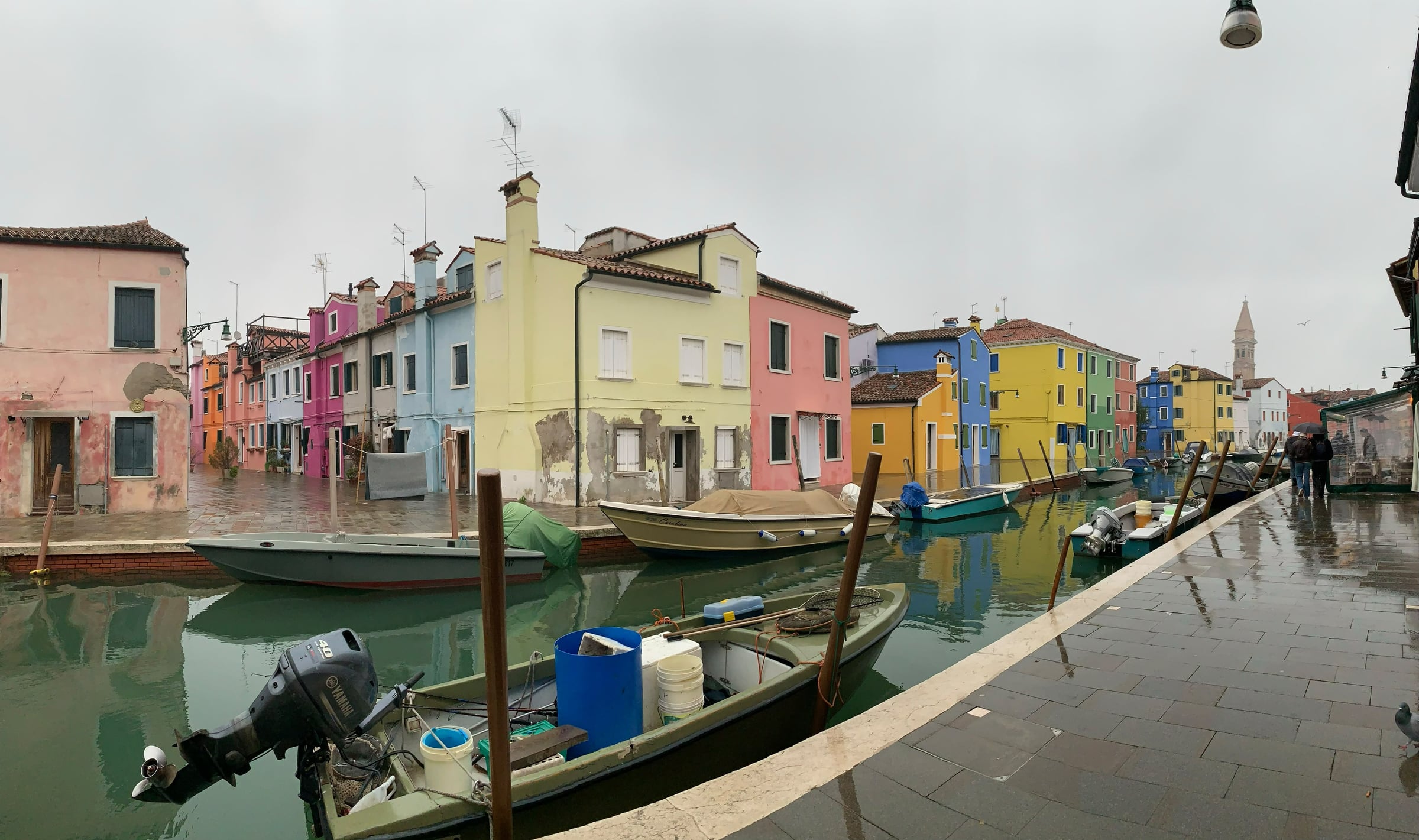
Rome can provide a strong historical and artistic opening. Florence and Tuscany can introduce Renaissance art, countryside and food traditions. Venice and the Venetooffer a completely different atmosphere, shaped by water, architecture and a slower urban rhythm. A fourth base can be added when it has a clear purpose: perhaps a coastal landscape, a particular cultural interest or time in a region that deserves more than a day trip. Venice is a good example. A short stop may allow travelers to see St. Mark’s Square and the main landmarks, but staying an extra night creates time to experience Venice beyond the busiest hours, explore quieter neighborhoods and appreciate the city at a more natural pace. It can also make room for a day escape into the Veneto, towards Verona, the Prosecco Hills or the Palladian villas, without treating the excursion as another rushed transfer. For a different northern direction, Liguria is also worth considering: a region of coastal villages, historic towns and sea views, with a character distinct from both Tuscany and the Veneto. Our article Liguria, the Coast Between Worlds explores this lesser-known side of the Italian coast.
Add contrast, not simply more names
A satisfying two-week journey usually contains contrast. A historic city can be followed by countryside. A demanding museum visit can be balanced with a quieter afternoon. A major cultural destination can be paired with an experience connected to local food, craftsmanship or landscape. This does not mean adding activities simply to fill the schedule. The bestprivate tours and day experiencesare those that give the journey a different texture and help travelers understand where they are. The right balance depends on the people traveling. A family, a couple interested in art and a group of friends returning to Italy may need completely different kinds of contrast.
Treat Southern Italy as a separate decision
Southern Italy should not be added automatically to a first-time route simply because there are two weeks available. The Amalfi Coast and Naples offer a very different geography from Rome, Florence or Venice. Puglia and Basilicata require their own pace, while Sicily is often best understood as a journey in itself. The question is not whether these regions are worth visiting. They certainly are. The question is whether they belong in this particular journey, given the arrival airport, the season, the interests of the travelers and the amount of time available. Sometimes the most intelligent decision is to give Southern Italy the attention it deserves on a future trip rather than reducing it to a hurried extension.
Use transportation according to the route
Transportation should support the journey, not dictate it. High-speed rail can be efficient between certain major cities. A private chauffeured vehicle is often more suitable for countryside, coastal areas, villages, wineries and routes where luggage, timing and flexibility matter.
A transfer between Florence and Rome, for example, does not have to be treated as lost time. Depending on the route, it can include a meaningful stop along the way, turning the movement between two bases into part of the experience. The right solution depends on the geography and on the overall rhythm. Our Italy travel FAQexplains how private transportation, accommodation, guides and experiences can be coordinated within a tailor-made journey.
Book the least flexible elements first
Hotels, specialist guides, private transportation, timed admissions and special access should be considered before filling every hour of the itinerary.
Some experiences are easy to reserve online. Others depend on a private opening, a specialist’s calendar or an individual arrangement with a historic site, artisan or private collection. This is where the Zest Collection can become relevant. It brings together private-access and bespoke experiences that are not presented as a standard public catalogue and need to be evaluated within the wider journey.
Planning early does not mean confirming every detail immediately. It means creating the right framework while there is still room to make thoughtful choices.
What to leave for a future journey
Nothing necessarily needs to be rejected. Some places simply deserve their own time. The Lakes, the Dolomites, Puglia, Sicily, Sardinia, Umbria or the lesser-known areas of Southern Italy can become the focus of a second journey rather than being reduced to a brief appearance in the first one.
A first trip should offer a meaningful introduction to Italy. It does not need to prove that every region can be covered in a single visit. Ourmulti-day journeys through Italyshow how different regions can be explored with their own rhythm and identity.
The real measure of a successful itinerary
The success of a two-week Italy trip is not measured by the number of destinations included. It is measured by how the journey feels from beginning to end: whether the transitions make sense, whether there is enough time to enjoy the places selected and whether the experience feels personal rather than assembled from a list. When we design a private journey, we look at the complete travel window, not just the sightseeing days. We consider the geography, the season, the accommodation changes, the transportation and the type of experiences that will give the trip its character. Because two weeks in Italy should feel like a beginning, not a race to the finish.
If you are planning a private Italy trip from the United States, share your dates, arrival and departure points and priorities through our contact form. We can help assess the geography before turning the idea into a complete journey.